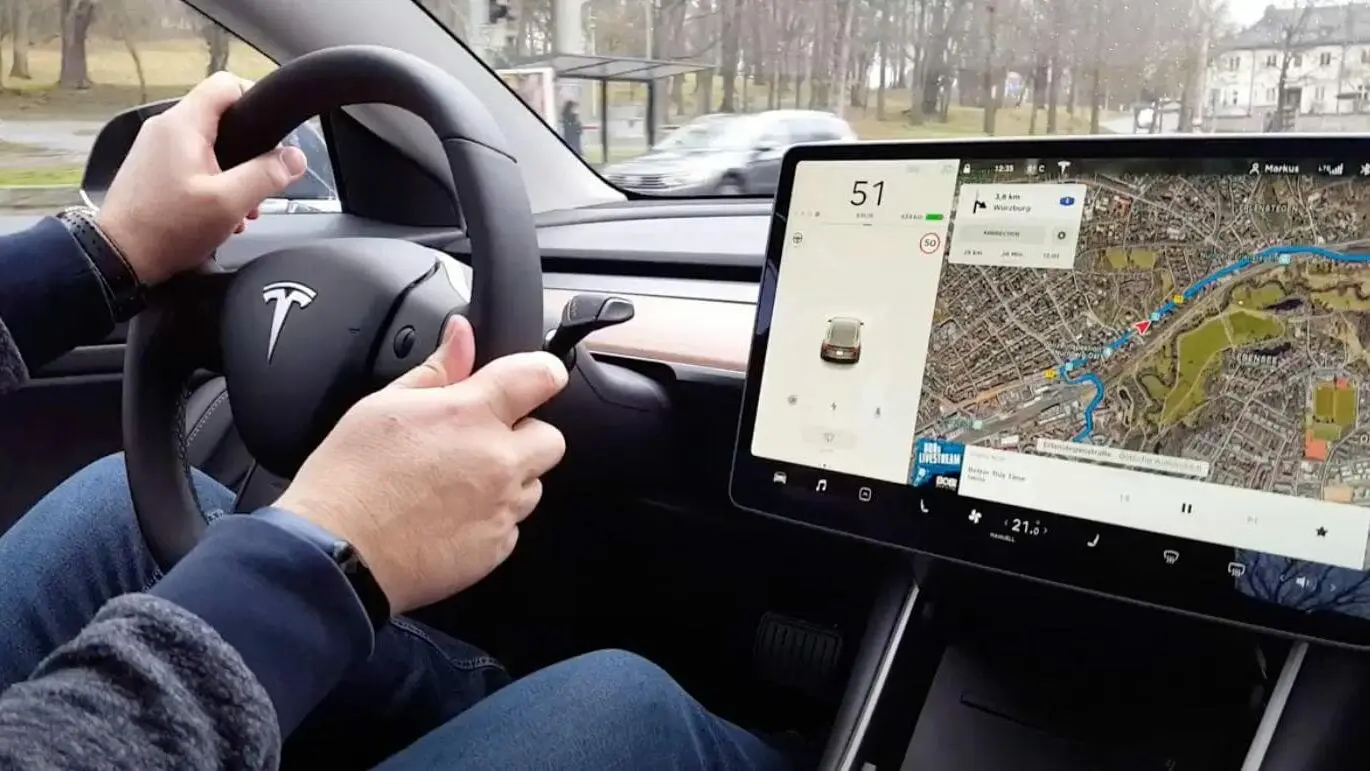
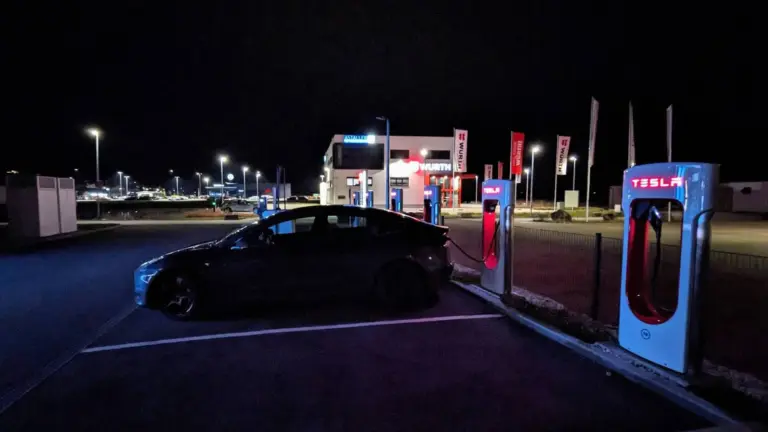
I’ve been driving a Tesla Model 3 AWD Long Range since 2020. I never regretted it. It’s fast, efficient, reliable, and charging works as effortlessly as filling up used to—actually even more effortlessly, because 90 percent of the time I charge from my own photovoltaic system, and in summer the kilowatt-hour costs me just 8 cents. A full charge: €4.40 for just under 400 km of range—which currently buys you 2 litres of petrol. Energy crisis and petrol price explosion? Pffffsss…
A quick note: this article is written from a German perspective — fuel prices, electricity costs, and infrastructure references throughout reflect conditions in Germany.
With my Sungrow PV system, 16 kWh of storage, and 14.5 kWp, I’m practically off-grid from March to the end of October. I still have my BMW Z3 as a fun youngtimer, but I would never consider an ICE car for everyday use again.
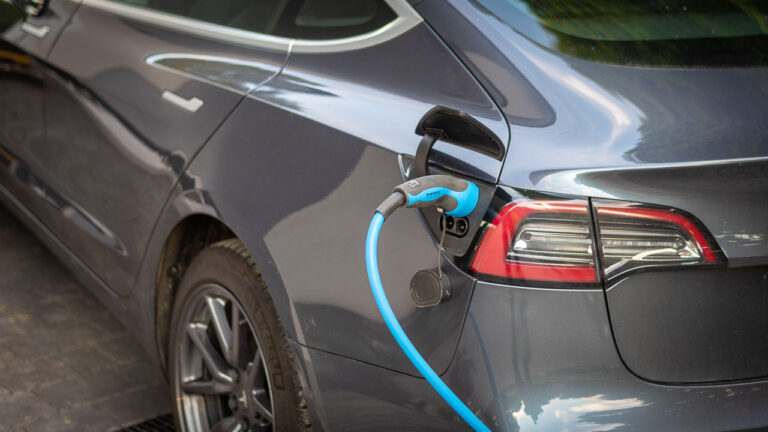
Second TÜV inspection: zero defects. In five years, a single notable repair — rear brake discs. That’s a reliability record most combustion engine drivers would be happy with — and yes, it’s the car that has given me the most joy so far, one I still genuinely look forward to getting into. Even after six years.
And yet I’m seriously thinking about switching. Not because the car has gotten worse. But because everything around it has changed — and because five years of daily life with a vehicle also sharpens your view of its weaknesses, weaknesses that early enthusiasm tends to paper over.
The Musk Problem
I’m not someone who ties purchase decisions to personal sympathy. But at some point a brand becomes inseparable from its owner — and Elon Musk has spent the last two years ensuring that Tesla carries a different connotation for many people than it did in 2020. I don’t need to elaborate. Everyone knows what I’m talking about.
On top of that comes a strategic uncertainty I wouldn’t have thought possible five years ago: Tesla is increasingly an AI and robotics company that also happens to build cars on the side. Whether that’s good or bad, I don’t know. But it means that the focus on the car as a product is no longer a given. You notice it in the absence of updates, in the hesitant model policy for Europe, and in a pricing strategy that has more to do with quarterly targets than customer retention.
There’s also the fact that the resale value is still acceptable right now, and there are still two years of warranty left on the battery and drivetrain.
What Has Actually Annoyed Me Over Five Years
Let’s start with what Tesla drivers rarely talk about publicly, because enthusiasm for the overall package tends to outweigh everything for a long time — until it finally needs to be said.
The automatic wipers. Five years, countless OTA updates, and they’re still the most irritating feature in the car. Too slow, too aggressive, wrong calibration — a different disappointment depending on the weather. That’s not a niche problem, that’s a basic function.
The high beams. Automatic, yes. But with a nervousness that distracts more than it helps on country roads. Constant flickering between high and low beam in situations where any driver would have made a clear call long ago.
The interior. Loud. Not unpleasantly loud, but genuinely surprising for a car at this price point — wind noise at the A-pillar and mirrors, road noise that registers more clearly than in comparable vehicles. Holding a conversation with passengers in the back seat at 140 km/h on the motorway: difficult. The new Model Y is apparently much better. My 2020 Model 3 is not.
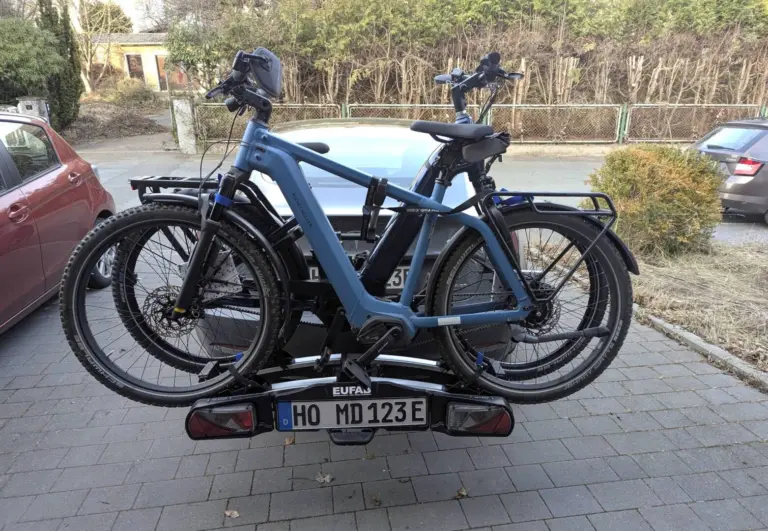
The detachable tow hitch. Manual, heavy, socket hidden away. A ritual you first have to learn and then curse every single time anyway. Quickly hook up a trailer for the composting site or mount the bike carrier? You think twice about it. The fact that the market leader in electric cars still does it this way in 2024 says something about priorities. Remove one cover, remove another cover from the coupling socket, insert the hitch ball and hope it clicks into place immediately — and so on.
No CarPlay, no Android Auto. That’s a design decision for Tesla — for me it’s a restriction. I’ve made my peace with it, but I never accepted it.
Auto parking and lane change. On the Model 3, only available as a paid extra, and underwhelming in practice. The lane change assistant works — sometimes. Auto parking is a demonstration, not an everyday feature. That’s still where things stand, five years after my purchase.
FSD I never expected and don’t expect in the coming years either. Meanwhile, other manufacturers are already well ahead.
The Model 3 boot isn’t small, but it’s awkward. My previous car was a Subaru Outback, whose load capacity was almost absurdly generous. I missed that more with the Model 3 than I expected.
I’m not writing this to talk down Tesla. The car has outlasted all of it and runs perfectly. But these are points I’m not prepared to accept in my next vehicle. In fairness, it also has to be said that the combination of performance, low consumption, and constant OTA updates at that price point is very hard to beat. You pay significantly more at Audi, VW, BMW or Polestar. But then of course you get German panel gaps — a discipline on which German carmakers rested for decades while missing out on software and EV technology. Panel gaps are a thing for people who care about panel gaps.
Xpeng — Who Are They, Actually?
Xpeng was founded in China in 2014 by entrepreneur He Xiaopeng, who had previously sold his software company to Alibaba. The name still means little to German buyers — but the numbers speak clearly: 190,000 vehicles were delivered worldwide in 2024, 50,000 of them in Europe. Volkswagen has taken a stake of nearly five percent and is jointly developing a new electric drivetrain platform with Xpeng for the Chinese market — which retrospectively explains why the vehicles have reached a quality level that European manufacturers in this price range are only now starting to aim for.
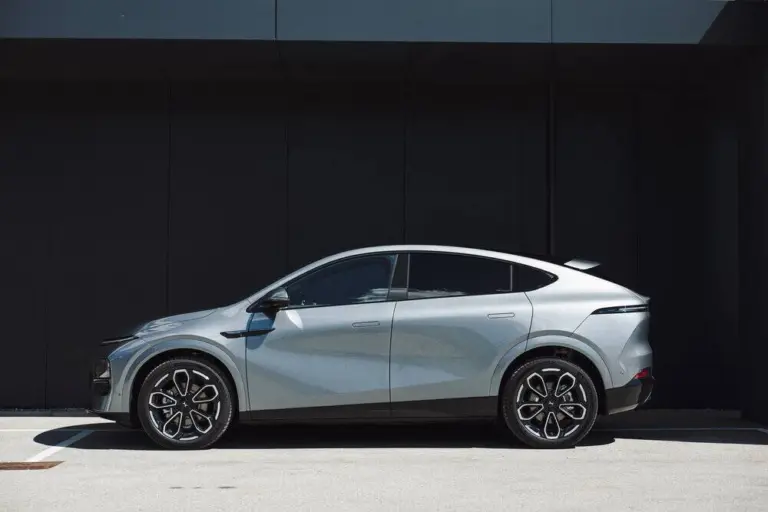
This is no longer a no-name brand you observe with scepticism. This is a serious manufacturer with Volkswagen as a strategic partner.
The G6 — A Deliberate Answer to Tesla
Anyone seeing the Xpeng G6 for the first time immediately thinks of a Tesla Model Y. That’s not a coincidence. Xpeng appears to take deliberate cues from Tesla — not just in design, but in the entire software philosophy: large central touchscreen, minimalist cockpit, consistent OTA updates, a tech brand that builds cars, not the other way around. The concept is familiar. The execution, from everything I’ve seen and read, looks remarkably mature.
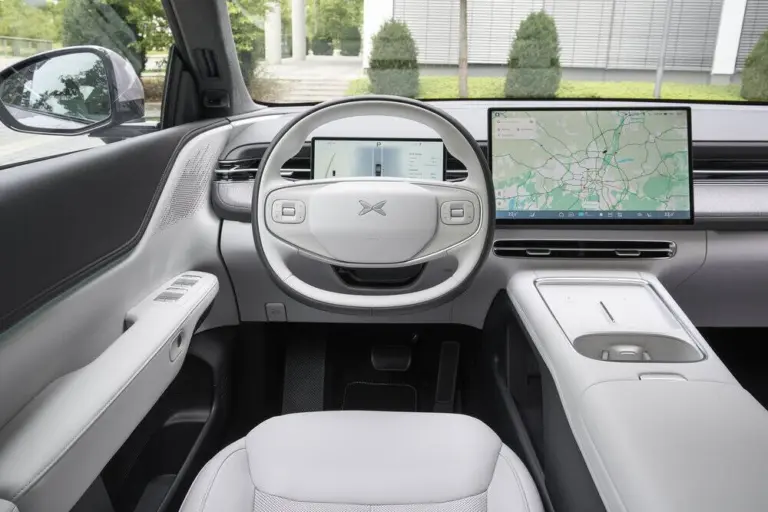
What particularly interests me: the driver assistance functions via the X-Pilot and XNGP system go significantly further than what Tesla offers as standard in Europe. Automatic lane changes, autonomous parking (even without the driver in the car) in tight spaces, predictive navigation integration — all standard, no paid subscription required. That’s a different philosophy.
The G6 Performance — What Specifically Interests Me
I live in the Fichtelgebirge. Country roads, hills, winter. All-wheel drive is not a lifestyle feature for me, it’s common sense — and the Performance variant of the G6 is the only one with AWD. 358 kW, 660 Nm, 0–100 in 4.1 seconds. I don’t need that.
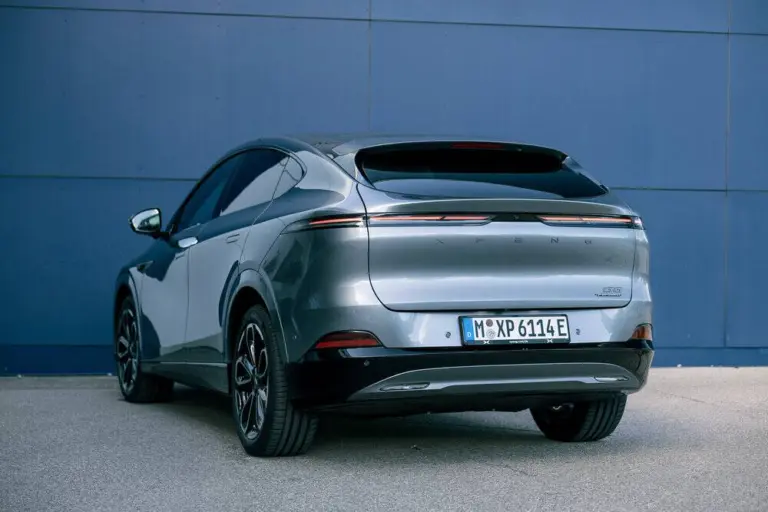
What I do need is confident overtaking on winding country roads and a drivetrain that doesn’t hesitate on snow and ice. It delivers both.
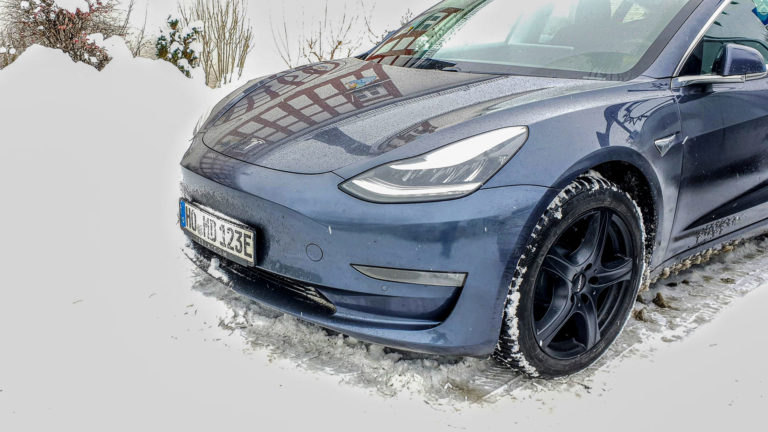
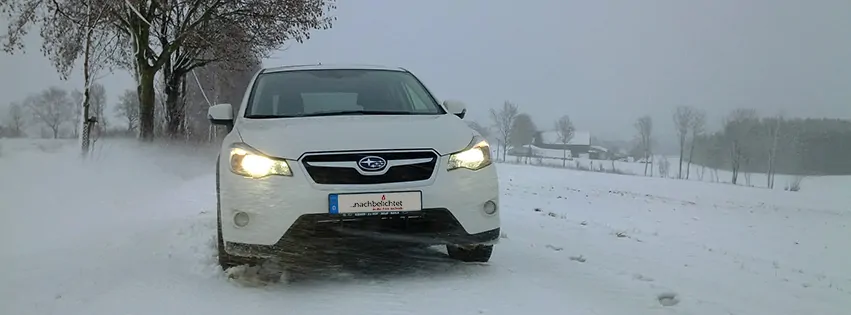
I’ve owned two Subarus, which undoubtedly have among the best AWD systems in any combustion car. But the dual-motor setup in the Tesla is a different league entirely. Electric motors can simply react and distribute torque far more precisely and quickly.
What else specifically appeals to me:
Charging. The G6 uses 800V architecture with up to 451 kW peak charging power. Irrelevant in everyday life — I charge at the PV. But on the rare long trip, that means 10 to 80 percent in just over 15 minutes at a strong HPC charger. Twice as fast as my Model 3. That’s genuinely significant. Not that the handful of charging stops at Tesla Superchargers ever bothered me much, but this is simply a new generation of charging technology.
V2L — Vehicle to Load. 230 V directly from the charging port, 3.3 kW. Power tools, equipment, in an emergency a coffee machine. Not essential, but very nice.
Android Auto — standard, no discussion. Done.
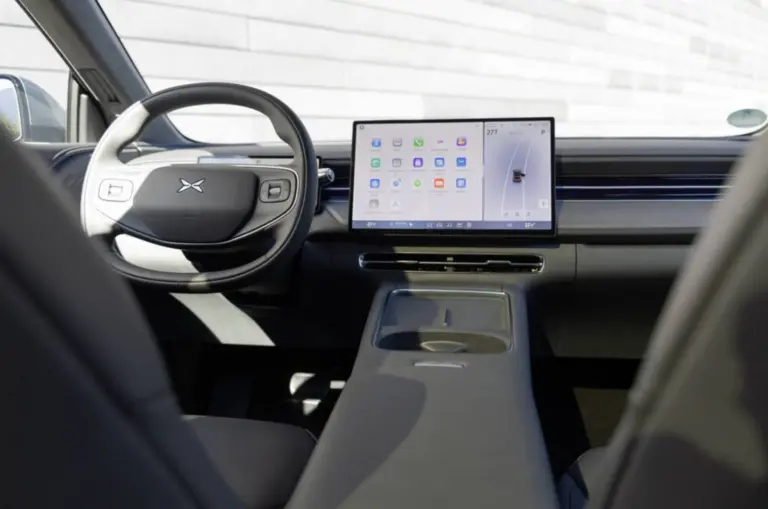
Automatic wipers that actually work. That sounds like a given. With the Model 3, it never quite was.
Automatic tow hitch — electrically deployable, up to 1,500 kg towing capacity (braked; 750 kg unbraked, 75 kg nose weight), socket mounted on the side of the coupling head. Press once, done. No crawling under the car required. That’s how it should work.
The interior is quiet. Very quiet. Every review confirms this, and the 2026 facelift apparently improved it further. For someone who values acoustic quality, this isn’t a detail — it’s a purchasing argument.
The 18-speaker sound system — I’ll test this thoroughly. What “sounds good” to an automotive journalist and what “sounds good” to someone with a home recording studio and 35 years of production experience may well be different standards. I’ll report back.
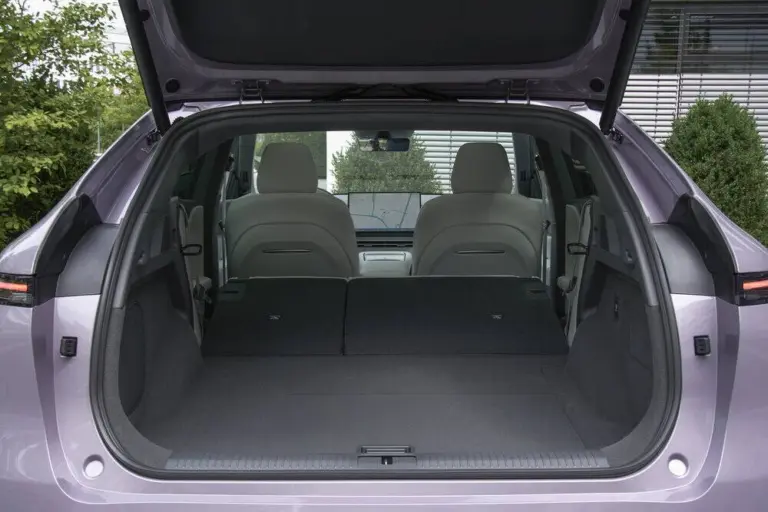
Reclining front seats with electric footrest — a detail no review takes seriously, and which I mention anyway, because it shows how carefully this interior has been thought through.
What I’m Not Looking For
I’m not a sporty driver — whatever that’s supposed to mean. There’s nothing sporty about pressing a pedal. Cornering dynamics, steering feel, handling at the limit — those are criteria for others. The G6 is, according to every review, a cruiser: comfort-oriented, softly tuned, little feedback through the steering. For what I do with a car, that’s not a drawback. It’s exactly what I want. The 2020 Tesla Model 3 is stiff as a board and rather uncouth, and I’m slowly getting too old for that.
The Open Questions
The service network is still thin. For me that concretely means: Nuremberg or Forchheim, Bamberg. Acceptable — but a limitation I’m going in with open eyes. It’s no different with Tesla. I had to go to Nuremberg there too.
The residual value risk of a young brand with no used car market history in Germany is real. Nobody knows what a G6 will be worth in four years. That’s exactly why leasing is the rational decision here: the risk stays with the leasing company, I keep the flexibility.
What Comes Next
A test drive. And then I’ll report back — on the sound system, through the ears of someone who knows monitors and microphones; on the software, the handling, the space, and everything else.
Whether I actually switch in the end, I don’t know yet. But the consideration is more serious than I expected — and I think that says more about Tesla than it does about Xpeng. The Xpeng G6 genuinely seems to be the only real alternative to a Tesla Model Y — and probably beyond that.
More information: https://www.xpeng.com/en-de/g6